
Top advantages of construction mats for your next building project
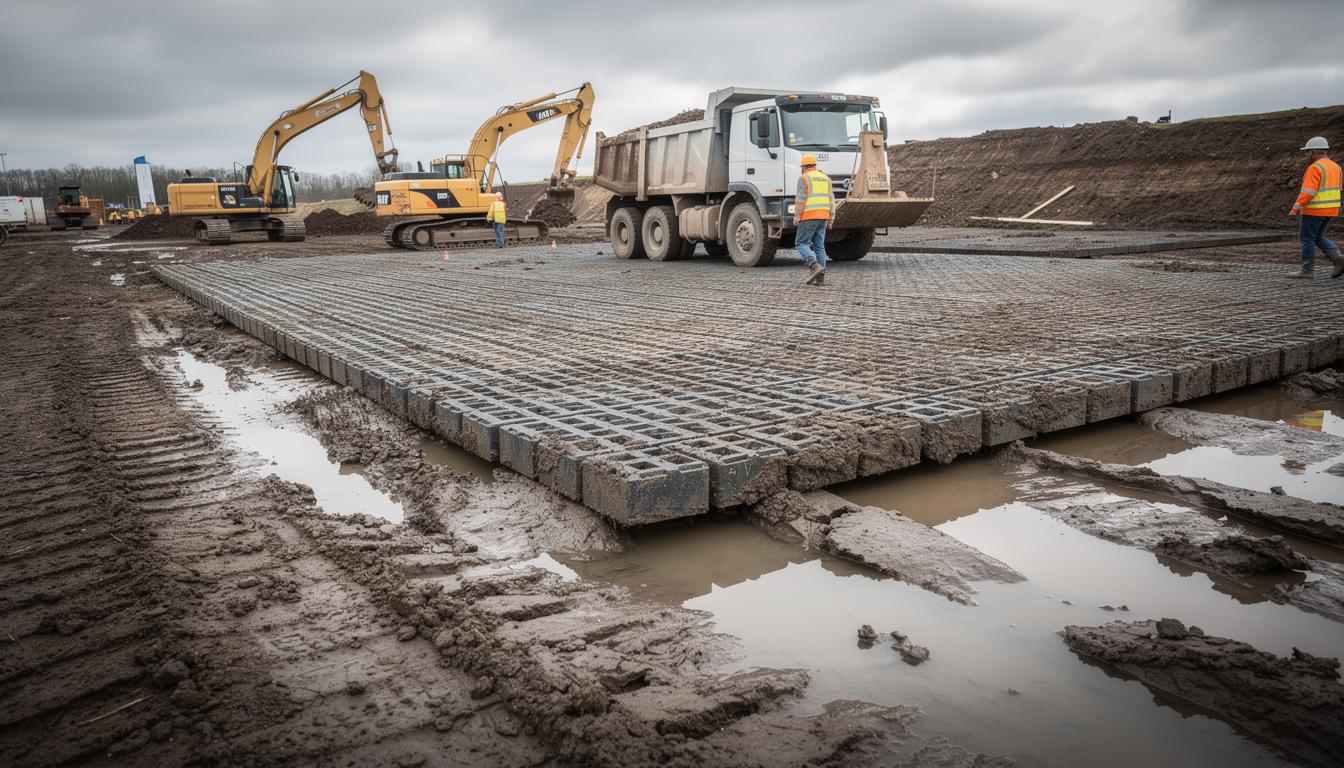
Mud clings to boots, machinery sinks into the muck after relentless spring rain, and delays multiply. Crew members stomp frustration into puddles, equipment jams into trenches, and the clock ticks while budgets suffer. On certain mornings, a truckload of thick panels, slotted together edge to edge, reform the chaos. Relief floods the site. Project managers watch the change spark: machines navigate terrain once declared off-limits, stress levels drop, and deadlines suddenly feel possible. Answers sometimes hide underfoot, not overhead. With construction mats, order replaces disorder, progress outpaces disaster. The truth, plain and direct: if stable ground, cleaner sites, and fewer problems matter, focus on the base.
The unseen work of construction mats
Project sites invent their own surprises, that's a fact, and the terrain never cares about schedules.
Cela peut vous intéresser : What Are the Intercompany Accounting Best Practices for Global Organizations?
Access mats, ground protection panels, site platforms—they stabilize, support, and keep everything rolling smoothly.
Big machines demand solid support, weight spreads evenly, nobody wants unstable ground under a 150-ton crane. The accessway doubles as a path, a workspace, a platform. Wind farms in Texas, high-rises sprouting in Toronto, straight to the logistics of bridging sodden soil or sandy ground. Some solutions need only one try to persuade even the skeptics. Many contractors now rely on BuildPro Ground Protection Mats for demanding applications.
A lire aussi : 301 Moved Permanently: what the HTTP status means for the website SEO
The practical powers of ground protection in building projects
Every loader and pump rolls easier with a steady pass below. Posts sink less, cables remain intact, the earth keeps its character.
Temporary roads, made up of dense panels, guide trucks through swamps, speed up crane deployment, and chop long delays to a minimum.
Gone: gouged turf, endless cleanup, ransom-priced restoration. The route—dry or drenched—remains viable. Rain no longer cuts crews off from progress. Progress glides where once disaster loomed. Saved hours pile up quietly, the surprise everyone appreciates.
The different types of mats for construction projects
No universal answer, no standard recipe works for all soils or needs. Sometimes timber feels obvious, sometimes the high-performance polymer panels outlast every expectation. Engineers puzzle over unique sites, weighing strength against flexibility, seeking a compromise tough enough for the load but gentle on the landscape.
| Type of Mat | Material | Main Uses |
|---|---|---|
| Hardwood mat | Oak or mixed hardwood | Cranes, pipeline support, heavy machinery |
| Composite mat | HDPE, thermoplastic | Ground protection, temporary roadways, event flooring |
| Steel mat | Galvanized steel | Long-term, high-load projects, industrial use |
| Rubber mat | Recycled rubber | Light vehicles, pedestrian walkways, utility projects |
| Crane mat | Laminated timber, steel-reinforced | Heavy lifting, large equipment support |
Some contractors reach for time-tested timber, trusted by generations, others snap up composite solutions for the quick rinse and repeat. The ground protects itself, the mission gets easier, risk loses its bite. Recent designs shine, with surfaces grippier, interlocks smarter, cleaning simpler. Strong, light, durable—manufacturers race to design for those three.
The advantages gained with construction mats
Mats show their value before pouring a foundation or hoisting a beam. The safety of the crew takes top billing; budgets stretch, and nature's toll shrinks. Project leads notice the difference from day one. Fast progress, no more flinching at every threat of rain. The backbone of productivity: often overlooked, never unnecessary. The difference stands in dollars, in downtime cut, and in insurance claims that never need filing.
The lift in safety and drop in risk
One deep rut, one slip, and the project stalls or worse—and that's why repeat use matters. OSHA regulations loom overhead, slips and falls spell trouble.
Mats grip the tire, the boot, the track—they clear a safe path where once mud threatened to swallow progress whole.
Crane stability depends on unwavering ground, and the lines running beneath the jobsite get less grief from heavy gear. Crews relax when they feel the firmness underfoot. Nobody ducks and dodges, no panic when forklifts roll out. Clearly marked zones, fewer collisions, a workplace that earns its good reputation.
The shield for nature's most sensitive patches
Preserving wetlands never happens by accident. Ground protection mats spare rare grasses from extinction, banks from collapse, and rivers from contamination. In 2026, environmental compliance serves as the silent arbiter of a project's fate. Difficult terrain? Regulators patrol, rules stiffen every year.
Protective surface panels block compaction, permit roots to recover, and handle runoff intelligently.
Mat use has grown, not from fashion but by regulation. Crews keep fines at bay, wildflowers still bloom come spring, and migratory birds settle again. Materials now recycle with confidence, no guilt attached to short-term access. No project lead shrinks from the sight of a once-pristine landscape scarred by misplaced wheels.
The race to finish on schedule, the hunt for savings
Delays breed anxiety, wipe profit off the books, and spawn frantic calls. Project access, lost or regained, dictates outcomes. Rain fell hard last week: on one side, trucks lined up, stuck, burning billable hours. On the other, eco-friendly mats provided workarounds for every challenge, efficiency soared, and schedules caught up.
| Measure | Without Mats | With Mats |
|---|---|---|
| Project delays | 7 to 14 days weather delay | zero to 2 days delay |
| Surface repair costs | Ten thousand dollars or more | One thousand dollars or less |
| Equipment access time | Hours lost to stuck vehicles | Five times faster access |
| Mat reuse rate | No uses | Ten or more projects per mat |
Sustained access, fewer interruptions, investment repaid with every deployment. Restoration costs drop, temporary panels head from site to site. Nobody needs to apologize for missed targets. Rent, buy, or borrow, the savings add up.
The factors shaping mat selection for building projects
Contractors argue—one touts timber, another insists on reinforced polymer. The truth splits with the project: no universal answer covers every site, every weather. Success, always fickle, demands careful matching. Regulations hover nearby, risk assessment rules every move.
The questions shaping product choice?
Soft peat, arid clay, slopes slick with oil? Twenty tons or a few forklifts? Surface composition sends the planner to research, weighing all factors, never satisfied with half-answers. Project duration, instant or marathon, influences investment. Environment makes itself heard, especially where protected streams run or parklands surround the site, narrowing possibilities without mercy. Adaptation outperforms brute force. Some mats absorb shocks, others flex under weight, some barely notice the elements. Regulatory requirements, always present, restrict errors—the expert knows compromise sometimes costs more than the best solution.
The names that count in access and protection
Brand loyalty travels from site to site. One crew vouches for YAK MAT, another goes all-in on Sterling, while the Gulf Coast projects swear by Quality Mat. Each swears by features that distinguish their favorite—service, design, dependability. Supply lines, when they fail, threaten more than budgets; reputations dangle precariously. Customized mats, built to measure, suit the ficklest conditions, hybrids appear for jobs that laugh at easy solutions. No project moves forward when the trucks never roll in.
The art of deploying and caring for site panels
No shortcut in construction survives long. Even the best mats succumb to hasty placement or careless handling. Cleaning routines, methodical inspections—these transform headaches into quiet accomplishment. Installers, when careful, start trouble-free days. Rituals matter: inspection, placement, cleaning, removal, always in this sequence.
The checklist for installation and aftercare
Every mat, before touching the ground, undergoes a careful scan. Chipped edges, warped boards, all flagged. Manufacturer's advice isn't a suggestion, but a mandate. Panels lock tight, every joint checked, no loose boards to trip a rushing worker. Mud, oil, and unfamiliar seeds get scrubbed free before the panels travel to their new job. Repeat inspections save mornings spent untangling disaster. One project overlooked inspection—crews spent the next hours pulling machines free.
The common errors during ground protection deployment
Poor distribution plagues impatient crews. Overloading wrecks stability, and guessed-at spacing creates hazards, not solutions. Mats do not forgive neglect. Thinking a panel lasts forever costs money next month. Clean, check, plan. Shortcuts—those enemies of smooth progress—bring nothing but cost spirals and panicked phone calls. Process commands respect; drama loses ground.
- Site analysis before panel selection ensures satisfaction
- Careful cleaning between uses avoids regulatory headaches
- Consulting with suppliers unlocks hybrid solutions for tricky ground
One morning, Amanda, running operations on an urban build, faces rain, slick earth, and flashbacks to last year's mud bath. The team deploys composite panels with practiced synchronicity, locks snap into place, boots step dry. Zero delays. Not one tow truck call. The client stands onsite, unbothered, boots still clean, and the crew swears this detail, this silent stability, changed everything. In project management, it only takes one such memory—mud resolved, risks reduced—to never forget the right choice.
Risks never vanish. Budgets demand calm, reputations ride on results. Ground protection delivers firmness, fewer disasters, and tangible proof that solid decisions pay off. Work progresses, boots stay dry, and a site breathes easier, project after project.